Monday, March 16, 2026

2026 Lent Reflections - Stewardship & Sacrifice

In the Gospel of Matthew, chapters 5 to 7 are accounts of the Sermon on the Mount, which records the teachings of Jesus in regard to a number of topics, like prayer, fasting, worry and serving two masters. This week we are going to consider Matthew chapter 6 verses 19 to 21, which says:


‘Do not store up for yourselves treasures on earth, where moth and rust consume and where thieves break in and steal; but store up for yourselves treasures in heaven, where neither moth nor rust consumes and where thieves do not break in and steal. For where your treasure is, there your heart will be also. - Matthew 6:19-21

So often during Lent we focus on ourselves and look for ways to improve our relationship with God, drawing closer to God and sacrificing things in our own lives to demonstrate our obedience. The reading encourages us to “store up” treasures, but ones that cannot be destroyed. So, what does that look like? The last verse lays it out plainly for us:


For where your treasure is, there your heart will be also.

The “heart” in biblical language is not emotion alone. It also refers to the centre of desire, will, and devotion. Jesus is saying, your investments reveal and shape your deepest loyalties. Reflect on what the heart of God may be today? Who is God’s treasure?

Christina Rossetti (1830-1894) wrote the following entitled, Good Friday:

Am I a stone, and not a sheep, That I can stand, O Christ, beneath Thy cross, To number drop by drop Thy blood’s slow loss, And yet not weep?

Not so those women loved Who with exceeding grief lamented Thee; Not so fallen Peter, weeping bitterly; Not so the thief was moved; Not so the Sun and Moon Which hid their faces in a starless sky, A horror of great darkness at broad noon – I, only I.

Yet give not o’er, But seek Thy sheep, true Shepherd of the flock; Greater than Moses, turn and look once more And smite a rock.

f we treasure only our own comfort, our hearts will be small. Christina Rossetti’s poem asks why we are sometimes “stone” while the rest of creation grieves. Brandon Heath’s Give Me Your Eyes serves as challenge and a prayer for us to widen our view and make others our treasure. To see the person on the street corner or the lonely girl in the Bay Cafe not as a “problem,” but as a person worthy of our sacrifice. Have a listen here:

According to Matthew 22:37-40, the greatest commandment is to love the Lord your God with all your heart, soul, and mind. A second, equally important commandment is to love your neighbour as yourself. Lent gives us time to improve our love of God, focusing on wherever we might be weak - heart, soul or mind. But we cannot ignore the second commandment, so here is the challenge this week...

The challenge this week is the Simple Table. Choose one mealtime this next week and change your menu to eat one minimalist meal, which must still be nutritious, and then donate your savings to a charity of your choice, thinking of others. As we sit in this small, tiny moment reflect on the world's hunger. Pray that we can shift our "treasure" from our own comfort to the needs of others. By eating a Simple Table meal and giving the difference away, we break that stone. We shift from consumers to stewards. We let go of the grip that we have on ourselves and allow a moment for God to soften our hearts and to consider others.

LET US PRAY:

Jesus, You gave everything so that we might have life. Everything we own is a gift from Your hand. As we simplify our lives and share our resources this week, help us to loosen my grip on ‘things’ and tighten our grip on You. Give us eyes to see the needs of the world and a heart big enough to respond with courage and generosity. Amen.


http://dlvr.it/TRWHnP

Tuesday, March 10, 2026

2026 Lent Reflections: week 4 - The Art of Stillness

Here are words from the First book of Kings, detailing the story of Elijah finding himself in a challenging situation and seeking God’s guidance. This is how he heard the voice of the Lord.

He said, ‘Go out and stand on the mountain before the Lord, for the Lord is about to pass by.’ Now there was a great wind, so strong that it was splitting mountains and breaking rocks in pieces before the Lord, but the Lord was not in the wind; and after the wind an earthquake, but the Lord was not in the earthquake; and after the earthquake a fire, but the Lord was not in the fire; and after the fire a sound of sheer silence. When Elijah heard it, he wrapped his face in his mantle and went out and stood at the entrance of the cave. Then there came a voice to him, - 1 Kings 19:11-13

We live in a “single-minded” rush, barely taking time to get to know ourselves in God, without external influences. Elijah found that God was not in the spectacular (fire/wind) but in the “whisper.” How much time do we take from our day to be in silence, a moment between lessons, a quiet space at lunch, the car drive home, a moment before bedtime in our room with no distractions? When does the “whisper” from God get through?

Read the poem below by Pablo Neruda and translated by Alastair Reid:

Keeping Quiet by Pablo Neruda


English version by Alastair Reid (Original Language Spanish)

Now we will count to twelve and we will all keep still. For once on the face of the earth let’s not speak in any language, let’s stop for one second, and not move our arms so much. It would be an exotic moment without rush, without engines, we would all be together in a sudden strangeness. Fishermen in the cold sea would not harm whales and the man gathering salt

Those who prepare green wars, wars with gas, wars with fire, victory with no survivors, would put on clean clothes and walk about with their brothers in the shade, doing nothing. What I want should not be confused with total inactivity. Life is what it is about; I want no truck with death.

If we were not so single-minded about keeping our lives moving, and for once could do nothing, perhaps a huge silence might interrupt this sadness of never understanding ourselves and of threatening ourselves with death. Perhaps the earth can teach us as when everything seems dead and later proves to be alive. Now I’ll count up to twelve and you keep quiet and I will go.

Neruda alludes that our “sadness” comes from never stopping to understand ourselves. Never finding that stillness and silence to seek God. Listening for that whisper! The Psalmist says it so beautifully in Psalm 46 verse 10a:

‘Be still, and know that I am God!

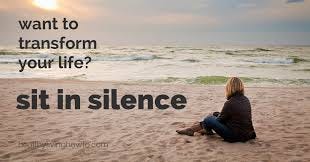
The challenge this week is to attempt to take five minutes, each day to sit in total, unplugged silence. Find a quiet spot, at school, home or work to sit in total silence for five minutes daily. No music, no talking. Just listen for God’s “still, small voice.“ In those five minutes, we realise we do not have to “perform” for God. We just need to sit with God. For a teenager, five minutes of silence might feel like an eternity; for an adult, it may feel like a luxury. Do what you can this week, working towards a full five minutes.

Let us pray:


Lord, the world tells us that our value comes from how much we do, but You tell us that our value comes from being Your child. Help us to be still. In the five minutes of silence we offer You this week, quiet our anxious thoughts. Teach us to listen for Your ‘gentle whisper’ and to trust that even when we are doing nothing, You are doing everything. Amen.


http://dlvr.it/TRPLLw

Thursday, March 05, 2026

2026 Lent Reflections: Week2 - Radical Kindness

Seeing others through God’s eyes from Monday 23 February to Sunday 1 March


http://dlvr.it/TRJW41

2026 Lent Reflection: Week 1 - The Invitation

Heart Preparation from Ash Wednesday 18 Feb to Sunday 22 Feb


http://dlvr.it/TRJVxn

Based on Matthew 11:2-11, I wrote the following for Gaudete Sunday.


http://dlvr.it/TRJVpk

in the area, come and visit...

Thanks for reading!


http://dlvr.it/TRJVk1